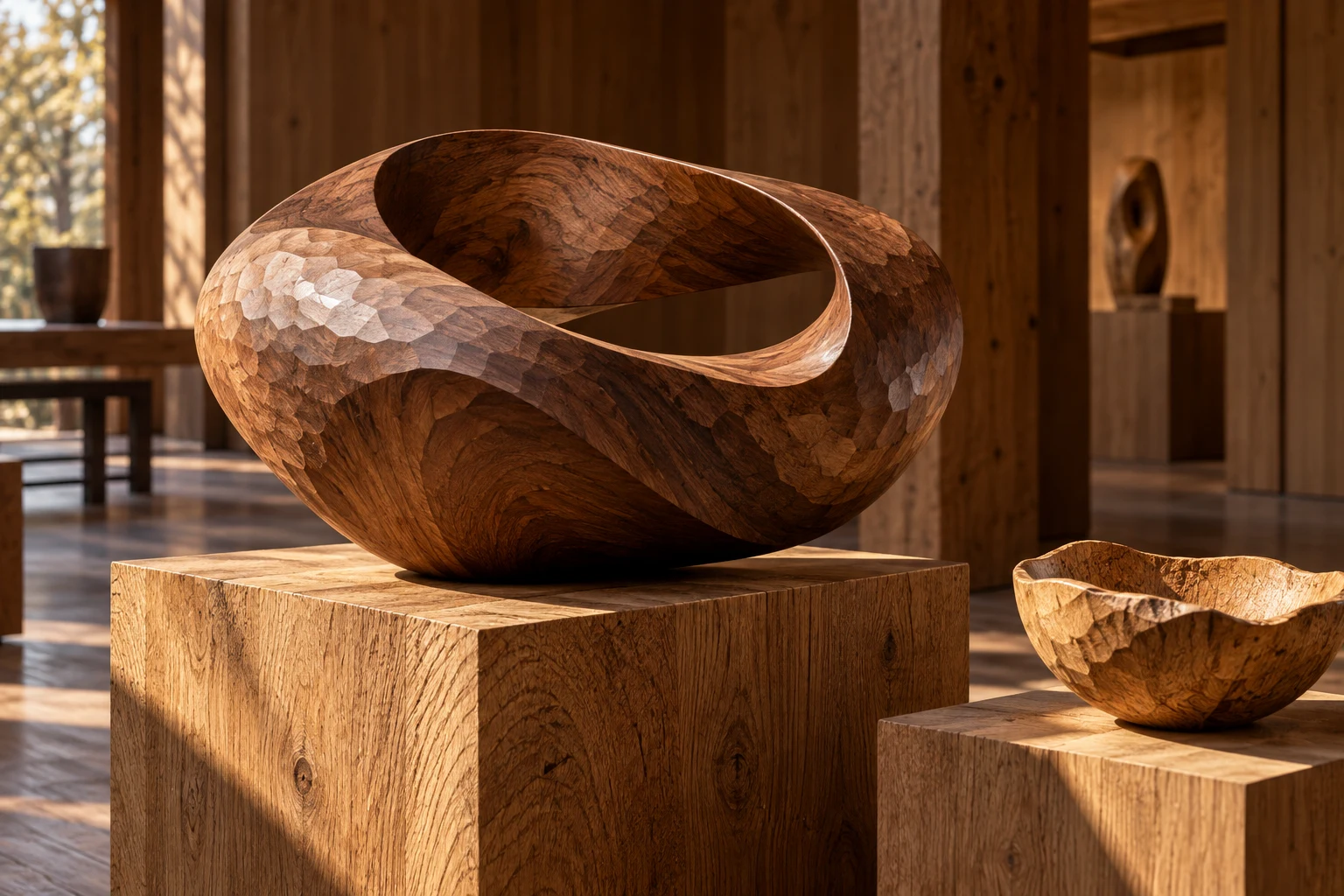
01 / The hollow
A vessel without a fixed purpose
The empty centre makes the surrounding timber feel lighter. Deep curves expose the grain from several directions, so walking around the object changes its expression.
06 / CARVED OBJECTS
Furniture solves a use. Sculpture opens a question. These small studies explore the space between the two.
OAK & CHISEL / THE CRAFT NOTEBOOK
Five decisions, revealed one at a time.
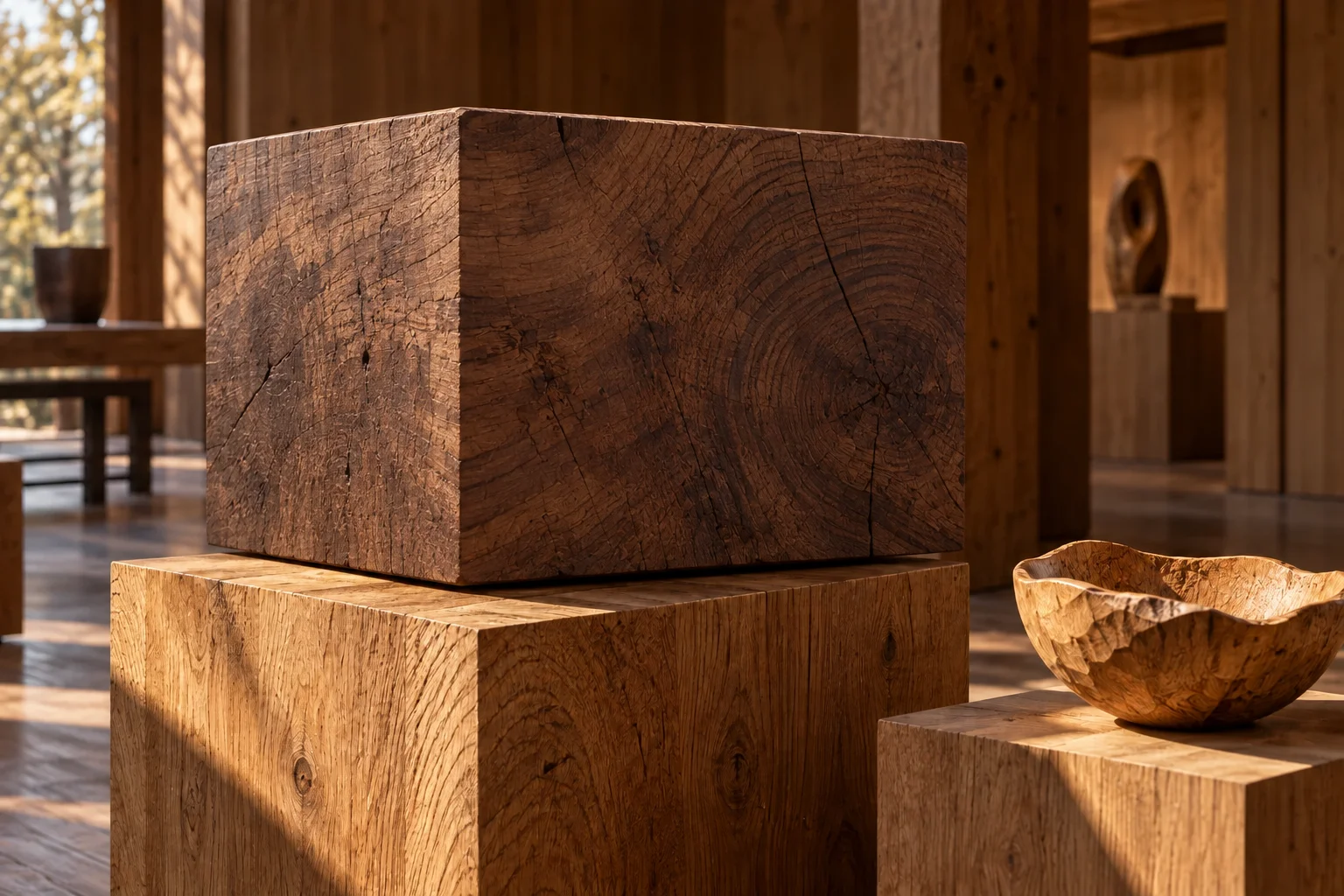 01 / 05
FOLD / AN IMAGINED MAKING SEQUENCE
The starting mass must contain the proposed form. Grain, checks and weak areas decide whether a blank is suitable at all.
Generated concept frames, not photographs of a real fabrication. The sequence explains removal and refinement; an actual maker would adapt it to grain, defects and safe workholding.
01 / The hollow
The empty centre makes the surrounding timber feel lighter. Deep curves expose the grain from several directions, so walking around the object changes its expression.
02 / The facet
Not every surface needs to be polished into silence. A rhythm of shallow cuts can hold the maker’s gesture while remaining considered and deliberate.
03 / The edge
A delicate-looking rim still needs enough material to survive handling. The transition is gradual: strength below, a lighter line above.
The objects shown are imagined design studies. A real carving must adapt to its individual piece of timber.