Marking gauge
A line you can work to.
Sets a consistent distance from a reference edge. A knife line is precise and gives the chisel or saw a clear boundary.
05 / THE WORKSHOP
Machines establish accuracy. Hand tools refine the last millimetre. The craft is knowing which approach serves the timber and the task.
OAK & CHISEL / THE CRAFT NOTEBOOK
Six roles, a shared material. Choose a number or a tool below.
TOOL FAMILIES / SCENE ANNOTATIONS
Sets a consistent distance from a reference edge. A knife line is precise and gives the chisel or saw a clear boundary.
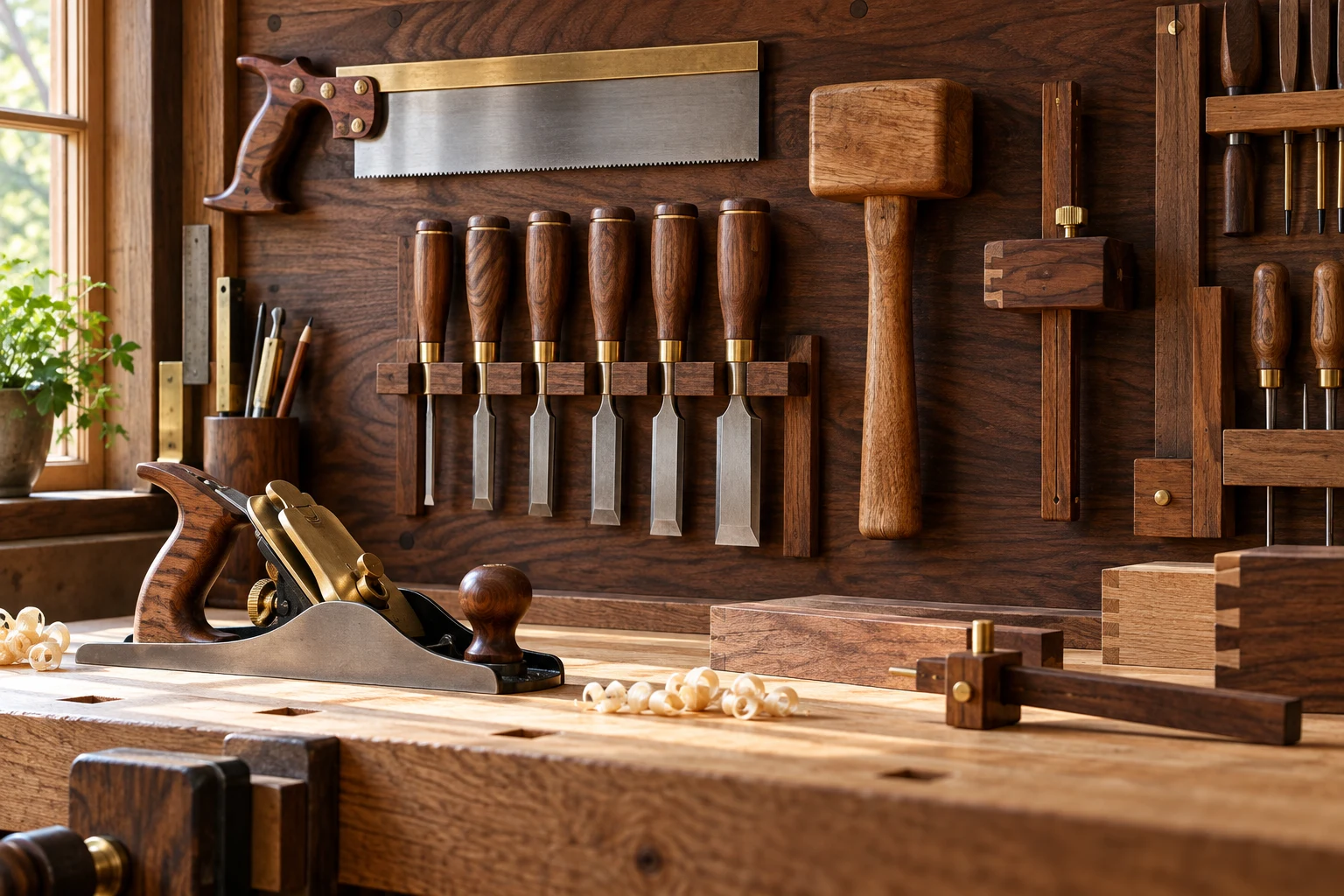
Numbered points connect the scene to six tool roles. The generated photograph is an atmosphere study, not an inventory or a precise location guide.
Read the full tool noteSets a consistent distance from a reference edge. A knife line is precise and gives the chisel or saw a clear boundary.
Refines a surface with a sharp iron and a controlled cut. Grain direction and blade setup matter as much as force.
Trims shoulders, pares end grain and cleans corners. The work must be secured and hands kept out of the cutting path.
Makes precise joinery cuts. Start with a light touch and preserve the layout line rather than trying to correct a rushed cut.
Its sweep shapes hollows and flowing surfaces. Match the profile to the form and work with the grain in small cuts.
A fine cutting burr removes delicate shavings. It can refine difficult grain without leaving the scratches associated with coarse abrasives.
Further reading from tool makers: Veritas